Life Systems
Topical plates of the atlas: the created living world, its design groupings, and its history of diversification, treated under the same discipline as the day plates (what Scripture states, what the data show, and what the model infers, kept distinct on the plate itself).
Creation Kinds
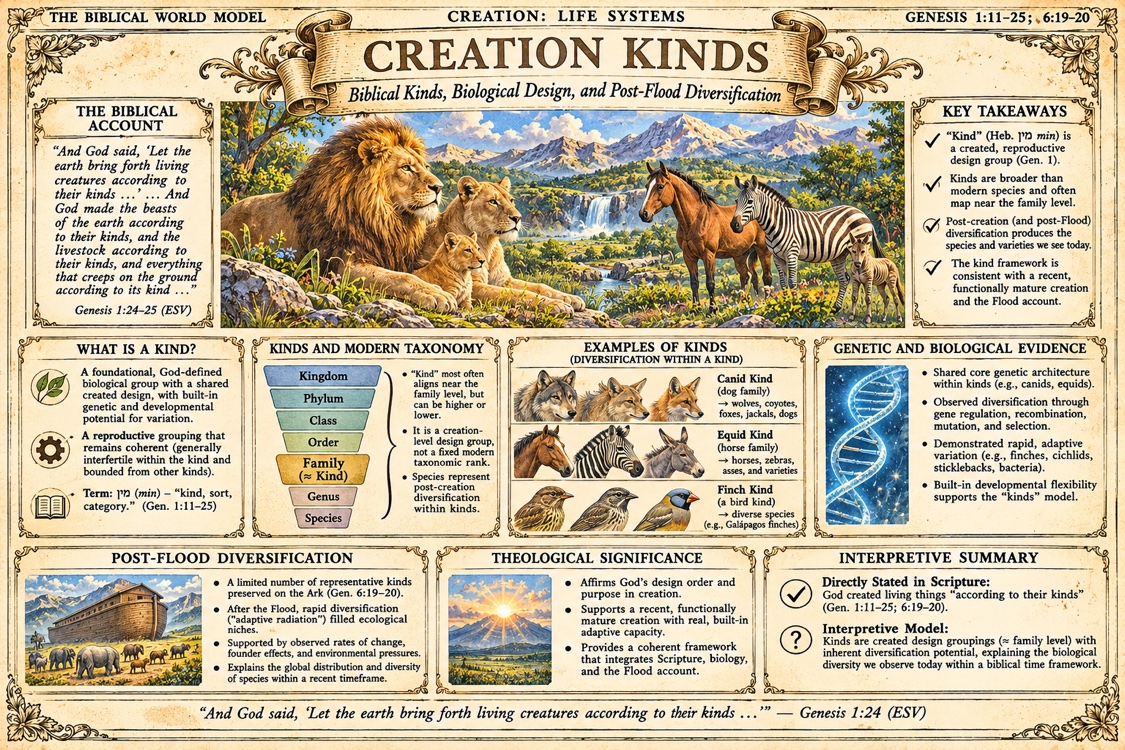
Plate (record BWM-IL-012) - Genesis 1:11-25; 6:19-20.
The first Life Systems plate, supplied by the author and filed as supplied. It sets out the biblical "kind" (Hebrew min): a created, reproductive design group, broader than the modern species and often mapping near the family level, with built-in potential for variation. Post-creation and post-Flood diversification within kinds produces the species and varieties observed today; its examples are the canid, equid, and finch kinds, with the genetic and biological evidence panel alongside. Its interpretive summary states the distinction plainly: creation "according to their kinds" is what Scripture states (Gen. 1:11-25; 6:19-20); the kind as a design grouping at about the family level, with inherent diversification potential inside a biblical time framework, is the interpretive model.
Time Is Not a Mechanism
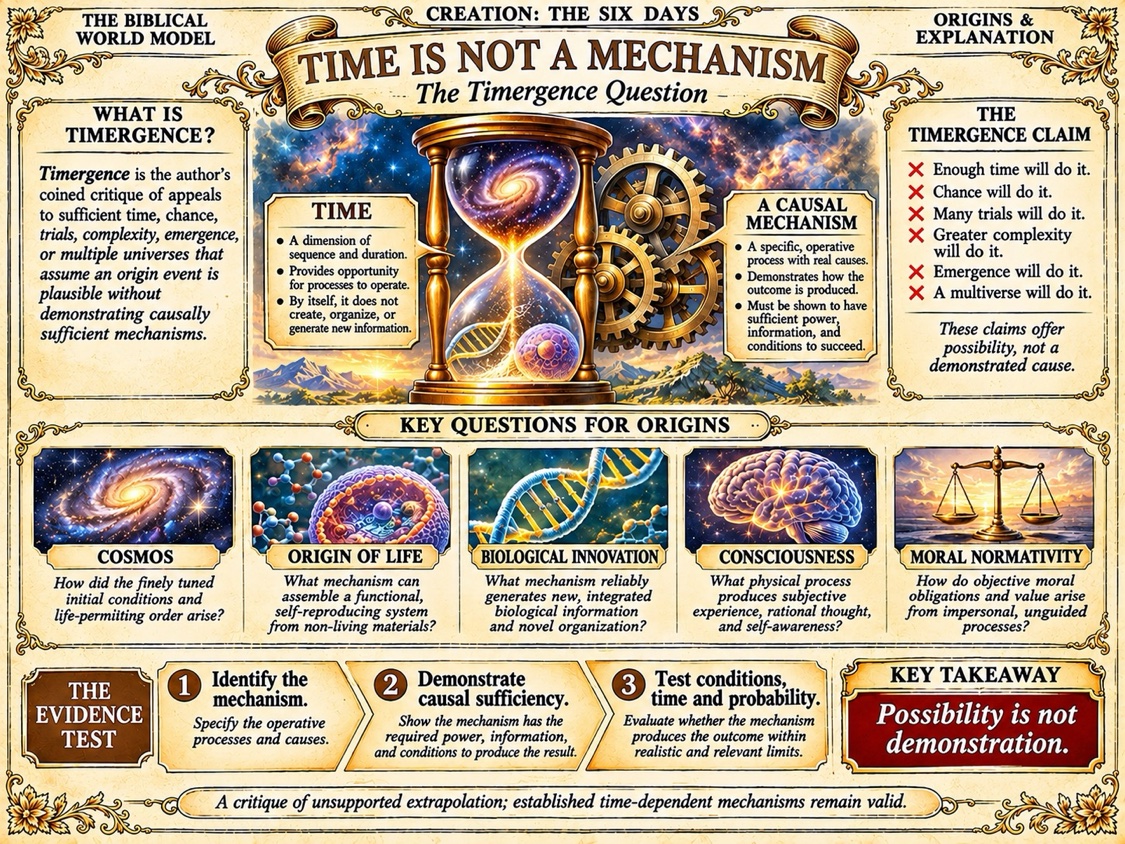
Plate (record BWM-IL-019) - no Scripture reference is cited on the plate.
The second Life Systems plate, supplied by the author and filed as supplied. It replaces the Design vs. "Timergence" plate originally filed under this number, at the author's direction before that filing merged. The plate defines the author's coined term: timergence is the critique of appeals to sufficient time, chance, trials, complexity, emergence, or multiple universes that assume an origin event is plausible without demonstrating causally sufficient mechanisms. Time, the plate argues, is a dimension of sequence and duration; by itself it does not create, organize, or generate new information. What an origins claim needs is a causal mechanism, shown sufficient to its outcome - the standard its three-step evidence test applies, and its key takeaway states in one line: possibility is not demonstration.
Status of these plates
Concept candidates at web resolution, with review gates pending; not print-ready. This plate was supplied by the author and filed as supplied; its filing audit is recorded in its record.